March 4, 2026
Construction sites are inherently risky environments, but excavation work introduces a distinct set of hazards that require specialized planning, training, and oversight. From trench collapses to equipment-related incidents, many of the most severe construction injuries occur during earthmoving and site preparation activities. While accidents can never be eliminated entirely, they can be dramatically reduced when projects are approached with discipline and professional expertise. This is where excavating contractors play a critical role.
Too often, safety is viewed as a regulatory obligation rather than an operational priority. In reality, accident prevention is a direct contributor to productivity, budget control, and project success. Delays caused by injuries, investigations, or damaged equipment can quickly derail even well-funded jobs. By contrast, contractors who embed safety into every phase of excavation work create sites that run more smoothly and predictably.
Understanding the Unique Risks of Excavation Work
Excavation introduces hazards that differ significantly from general construction activities. Soil conditions can change rapidly, trench walls can fail without warning, and underground utilities may present invisible threats. Unlike many other trades, excavation work frequently deals with unstable environments where small miscalculations can lead to serious consequences.
Cave-ins remain one of the most dangerous risks. Even a relatively shallow trench collapse can generate enough force to cause fatal injuries. Workers may also face hazards from falling loads, shifting materials, or mobile equipment operating in confined spaces. These risks are dynamic, meaning conditions can evolve hour by hour.
Professional excavating contractors understand that excavation safety begins long before any soil is disturbed. Site assessments, soil classification, and hazard identification are foundational steps. Without these evaluations, crews operate blindly, increasing the likelihood of preventable incidents.
Implementing Thorough Pre-Job Safety Planning
Accident prevention is rarely the result of a single safety measure. Instead, it emerges from structured planning that anticipates potential hazards. Pre-job safety planning allows contractors to define procedures, assign responsibilities, and prepare mitigation strategies before risks escalate.
Effective planning includes reviewing site drawings, utility maps, and engineering reports. Contractors assess soil stability, groundwater presence, and adjacent structural loads. These factors influence protective systems, equipment selection, and excavation sequencing.
When planning is neglected, crews are forced into reactive decision-making. This often leads to rushed judgments, improper protective systems, or unsafe workarounds. By contrast, experienced excavating contractors use planning as a primary defense against accidents, not as a paperwork exercise.
Safety planning also creates accountability. Clear protocols ensure workers understand expectations, supervisors can enforce standards, and potential issues are addressed systematically rather than informally.
Prioritizing Comprehensive Worker Training and Education
Even the most carefully designed safety plan is ineffective if crews lack the training to execute it properly. Excavation work demands technical knowledge that extends beyond general construction safety practices.
Training must address soil behavior, protective systems, equipment operation, and hazard recognition. Workers should understand warning signs of trench instability, proper entry and exit procedures, and emergency response protocols. These competencies are developed through structured education, not on-the-job improvisation.
This is one of the clearest distinctions between professional contractors and DIY approaches. Excavation may appear straightforward, but underlying risks are often misunderstood by inexperienced operators. Attempting complex excavation without adequate training significantly increases exposure to serious hazards.
Reputable excavating contractors invest heavily in workforce education because skilled crews are safer crews. Training transforms safety from a set of rules into an operational mindset.
Utilizing Proper Equipment and Protective Systems
Equipment selection and usage are central to excavation safety. Protective systems such as trench boxes, shoring, and sloping configurations are not optional safeguards — they are engineered solutions designed to prevent catastrophic failures.
Using inadequate or improperly installed systems can be as dangerous as using none at all. Protective measures must match soil classifications, excavation depth, and environmental conditions. This requires technical expertise and real-time judgment.
Heavy machinery also introduces risks. Operators must maintain visibility, control swing radii, and manage interactions with ground crews. Poor equipment coordination frequently contributes to struck-by incidents and collisions.
Professional excavating contractors understand how to integrate machinery and protective systems into a cohesive safety strategy. Equipment is not simply deployed; it is managed, inspected, and adjusted as site conditions evolve.
Maintaining Safe Soil and Material Management Practices
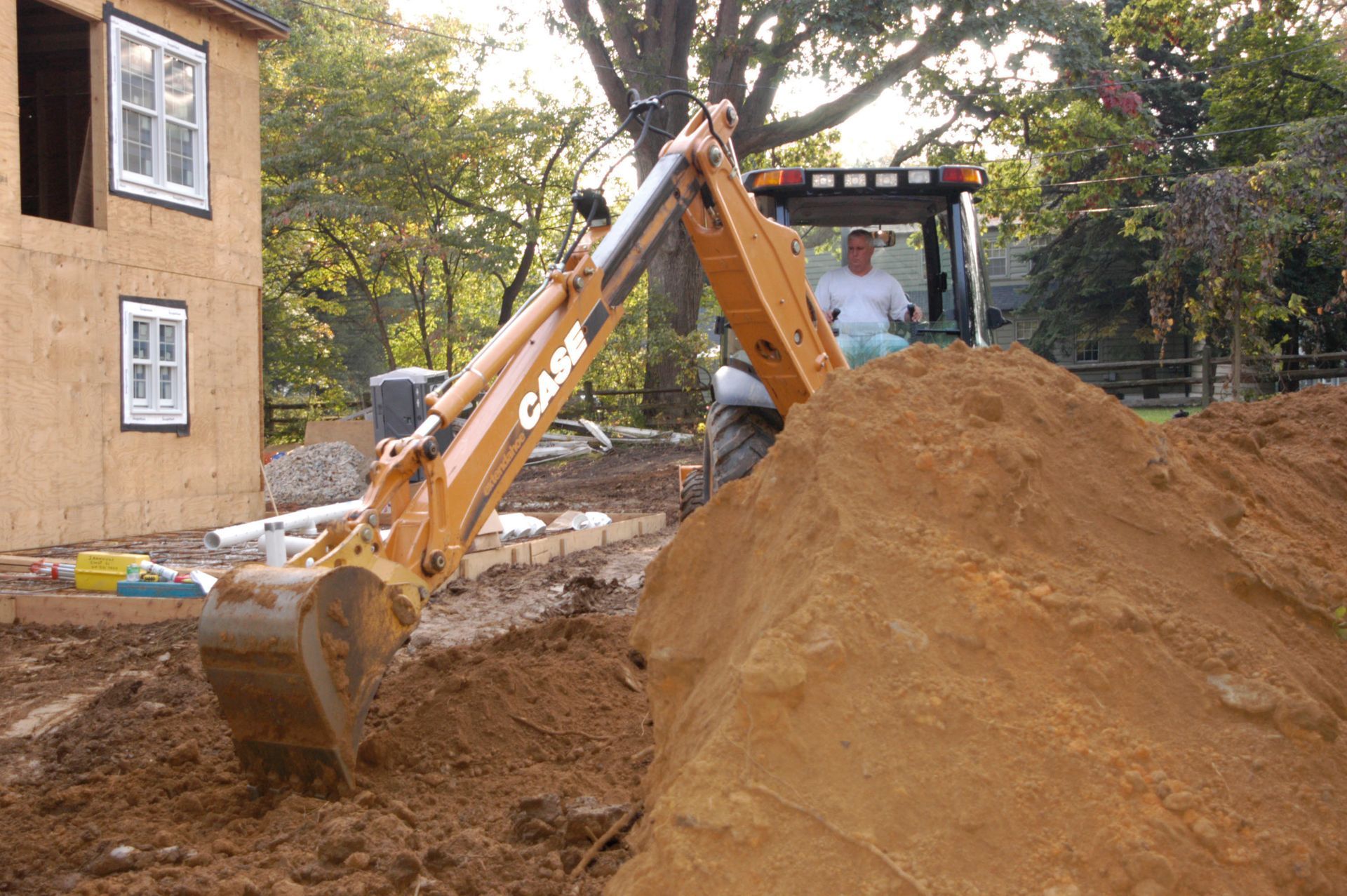
One commonly overlooked safety factor involves the placement of excavated soil and materials. Improper spoil pile management can destabilize trench walls and increase collapse risks.
According to OSHA, excavation professionals are advised to keep removed soil and materials a minimum of two feet away from trench edges. This guideline exists because excessive weight near an excavation can compromise wall integrity and trigger failures.
While this may appear to be a minor detail, it illustrates a broader principle: excavation safety is shaped by small operational decisions. Seemingly routine practices — where soil is placed, how loads are handled, how edges are protected — can determine whether a site remains stable.
Experienced excavating contractors incorporate these practices automatically. Soil management becomes part of standard workflow rather than an afterthought prompted by inspections.
Strengthening Communication and Site Supervision Protocols
Construction accidents often stem from miscommunication rather than technical failure. Excavation work, with its constantly shifting conditions, demands clear, consistent information exchange.
Supervisors must communicate hazards, procedural changes, and safety expectations in real time. Workers must feel empowered to report concerns without hesitation. Equipment operators and ground crews must coordinate movements precisely.
Inadequate communication creates confusion, and confusion breeds accidents. A worker entering an unprotected trench, an operator unaware of personnel locations, or a crew misinformed about soil conditions can quickly produce dangerous situations.
Professional excavating contractors treat communication as a safety control mechanism. Daily briefings, hazard updates, and clearly defined reporting channels reduce uncertainty and reinforce safe behaviors.
Supervision is equally vital. Active oversight ensures safety protocols are followed consistently rather than selectively.
Emphasizing Professional Expertise Over DIY Excavation
Excavation is frequently underestimated because its visible tasks — digging, grading, moving soil — appear deceptively simple. However, the underlying risks involve structural forces, soil mechanics, and regulatory compliance.
DIY excavation often overlooks these complexities. Without professional assessment, individuals may misjudge soil stability, neglect protective systems, or underestimate equipment hazards. The consequences can include severe injuries, property damage, and costly remediation.
Professional excavating contractors bring technical knowledge, regulatory awareness, and operational discipline that dramatically reduce accident risks. What may appear to be a cost-saving DIY decision can quickly become an expensive liability when safety failures occur.
Excavation safety is not about avoiding fines — it is about preventing life-altering incidents.
Building a Culture of Continuous Safety Improvement
Accident prevention is not a static achievement. Conditions change, technologies evolve, and new risks emerge. Contractors who maintain strong safety records view improvement as an ongoing process rather than a completed objective.
This includes conducting regular inspections, analyzing near-miss incidents, and updating safety procedures. Lessons learned from minor issues often prevent major accidents. Continuous evaluation transforms safety into a living system rather than a fixed checklist.
High-performing excavating contractors understand that complacency is itself a hazard. Consistent vigilance sustains safe operations even as project pressures intensify.
Minimizing job site accidents is not simply a regulatory concern — it is a strategic imperative. Safer sites experience fewer delays, reduced costs, stronger workforce morale, and improved project outcomes. Excavation work, given its inherent hazards, demands specialized expertise that cannot be improvised or approximated.
From pre-job planning and workforce training to equipment management and soil handling, every safety measure contributes to a broader system of risk control. Professional contractors integrate these elements seamlessly, transforming safety into an operational advantage rather than a compliance burden.
If you're planning an excavation project, the smartest investment you can make is partnering with experienced professionals who prioritize both precision and protection.
Contact us at AHC Excavation Co to discuss your project and ensure your site is prepared, protected, and built on a foundation of safety.